
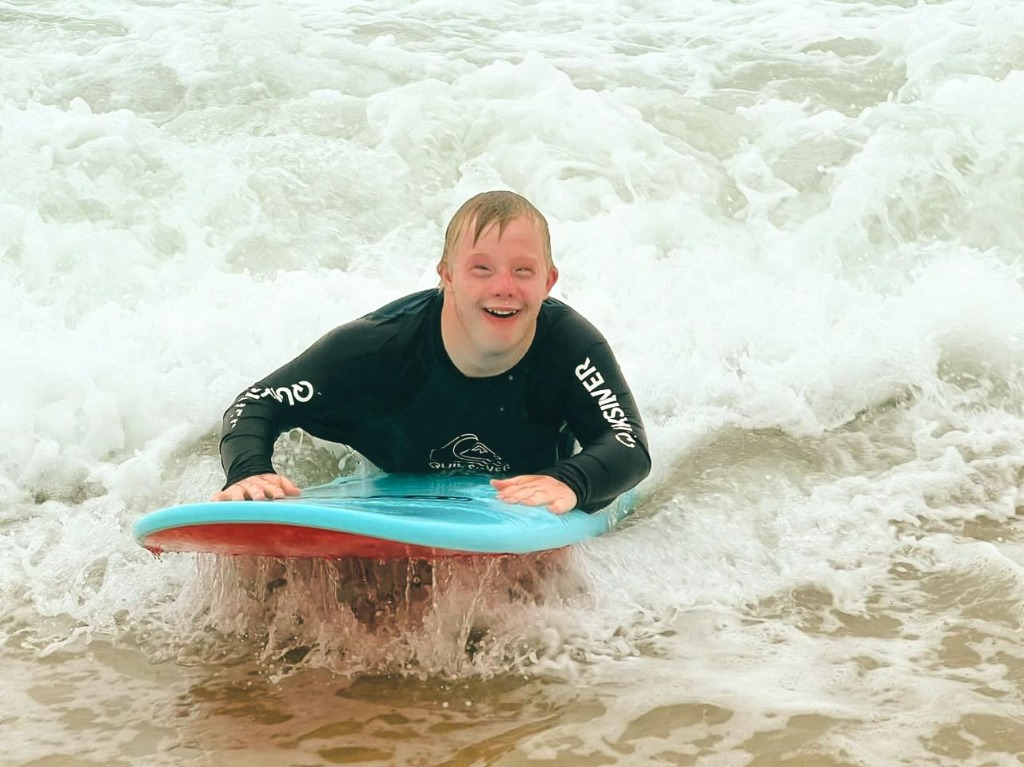
Harnessing the Healing Power of the Ocean
There's something deeply restorative about being near water—and even more powerful about being in the ocean. The ocean provides a calming sensory experience—the rhythmic sound of waves, the feel of saltwater, the endless horizon—all of which can help regulate our nervous systems and bring us into the present moment.
The ocean offers something a pool simply cannot: ocean water contains over 80 essential minerals and trace elements that provide therapeutic benefits during exposure to the ocean.
The water from the ocean stimulates the parasympathetic nervous system and can boost the immune system. The ocean isn't just water—it's a living, mineral-rich environment that boosts the body's natural healing processes.

Surf therapy is for everyone—all ages, all abilities, all diagnoses. It is an engaging, low-stress format where participants thrive.
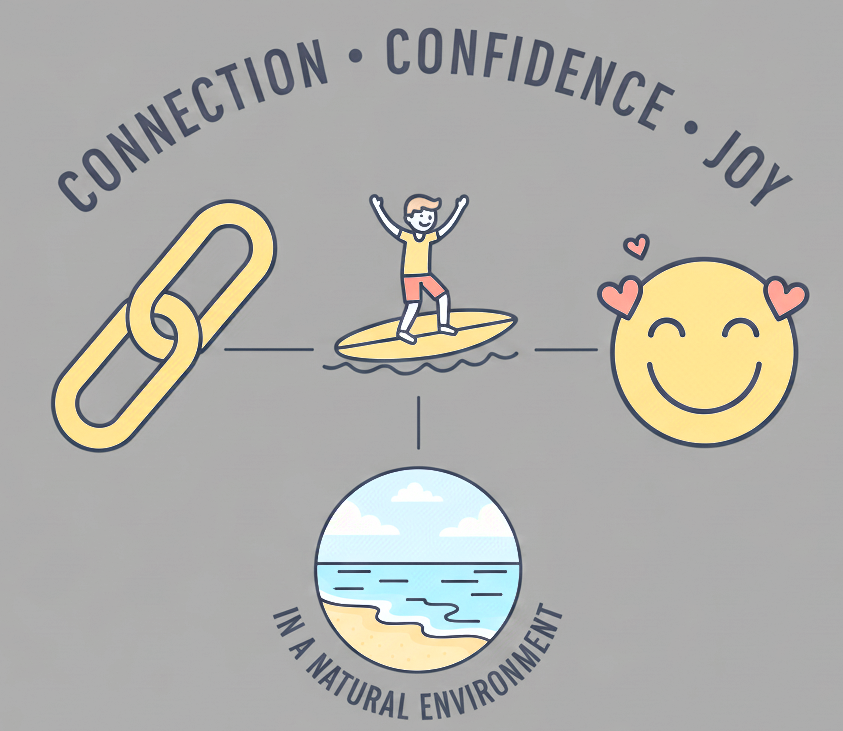
Surf therapy isn't just fun—it's therapeutic. Peer-reviewed research continues to show powerful benefits across physical, mental, and social wellbeing.
Research shows that children and adolescents receiving surf therapy reported reductions in symptoms of depression, anxiety, emotional problems, peer problems, hyperactivity/inattention, and overall difficulties.
Source: ScienceDirectA study of Australian Defence Force personnel found statistically significant reductions in symptoms of post-traumatic stress, depression and anxiety following a surf therapy program, and these improvements remained stable at 7 months post-program.
Source: ScienceDirectAn 8-week surf therapy program may increase self-esteem, resilience, and social connection, and reduce depressive symptoms among Australian adolescents.
Source: PubMed Central
Research demonstrated significant improvements in core strength, upper body strength, flexibility, and cardiorespiratory endurance in children with disabilities participating in surf therapy, as well as a significant reduction in total body fat percentage and improvements in bone mineral density.
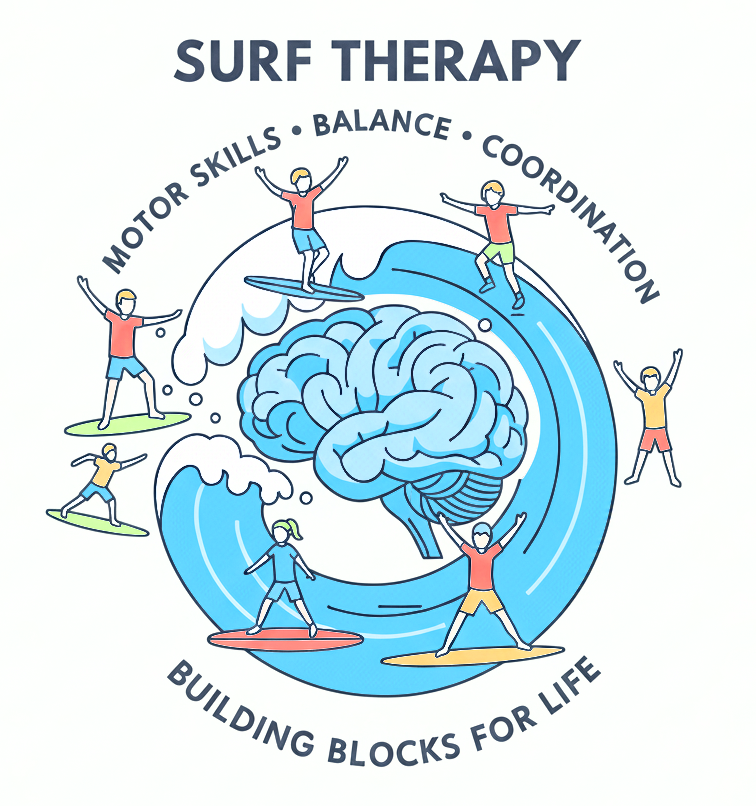
Source: PubMedSurfing develops gross motor skills, fine motor control, balance, coordination, and body awareness. The water's buoyancy can make movement easier for individuals who may need more support on land.
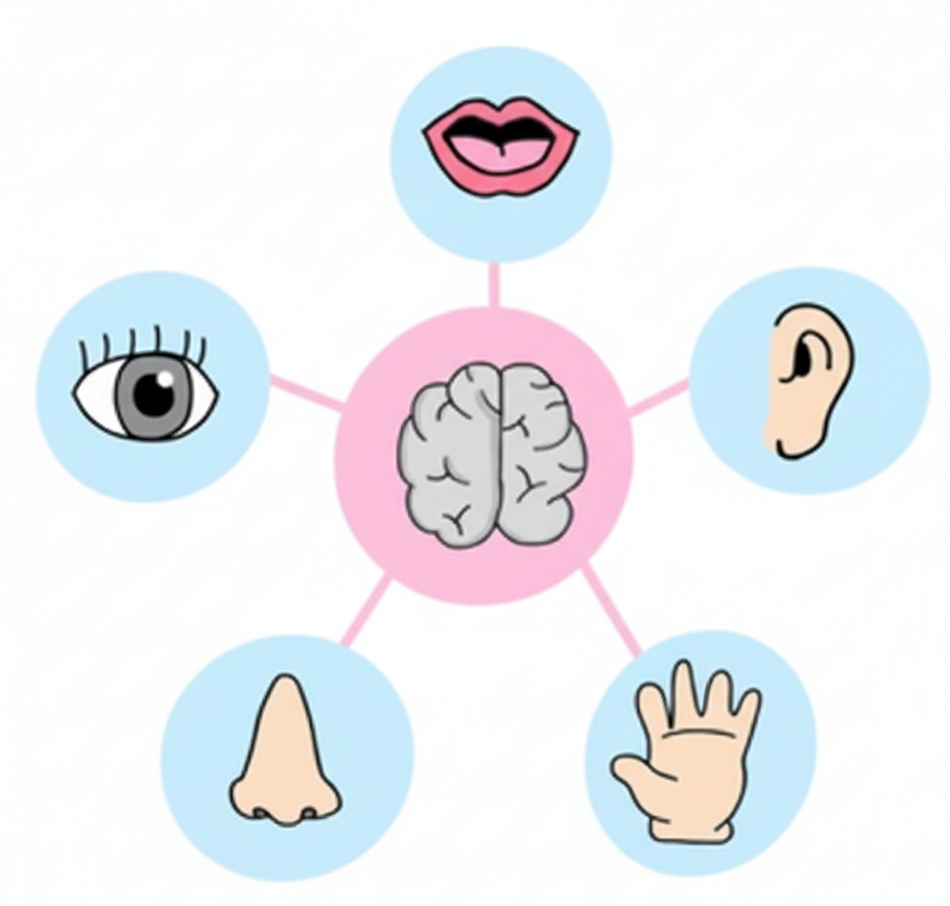
The sensory benefits of surfing can assist with self-regulation and emotional regulation. The repetitive nature of surfing is predictable and can feel organizing for the nervous system.
Source: Autism SwimThe ocean provides rich sensory input—proprioceptive feedback from paddling and balancing, vestibular stimulation from movement on the board, and tactile input from water and sand—all of which can be calming and organizing for individuals with sensory processing differences.
Surf therapy has shown particular promise for neurodivergent individuals. Undertaking activities such as surfing that provide additional sensory feedback can be organizing and beneficial to people on the autism spectrum and those with specific learning needs.
Source: Autism SwimResearch found that children with autism had positive experiences in surf therapy programs and surf therapy can have a positive effect on children with ASD's overall wellbeing.
Source: Gjcpp
Surfing assists with social connectedness in a low-demand way, making it easier for participants to engage socially with their peers.
Source: Autism SwimTwo core components were fundamental to positive outcomes: self-selected progress and the creation of an emotional and physical safe space, which facilitate improvements in mental health through a sense of mastery, respite, and increased social connections.
Source: PubMed CentralReady to experience therapy where life happens? Reach out today to discuss custom surf therapy pathways.
Get in Touch